
Virginia Busted Mugshots
Virginia busted mugshots are public records held by sheriff offices, local jails, and courts across the state. You can search for arrest records and booking photos from the county where an arrest took place. Each of Virginia's 95 counties and 39 independent cities maintains its own arrest and inmate records. The Virginia State Police also keeps a central criminal history database. This page covers where to look, how to request records, and what state law says about public access to mugshots and arrest information in Virginia.
Virginia Arrest Records Overview
How to Find Virginia Busted Mugshots
Busted mugshots in Virginia come from several different sources. Most booking photos are held by the local sheriff's office or jail where the arrest was processed. Each county and independent city in Virginia has its own law enforcement structure. The agency that made the arrest takes the booking photograph and keeps it in the inmate's file. To get a mugshot, you start with the sheriff or police department in the jurisdiction where the arrest happened.
Virginia law is clear on this. Under Virginia Code §2.2-3706(A)(2), adult arrestee photographs taken during initial intake must be released to the public. This means booking photos are not optional to share. If you ask for one and it is not part of an active felony investigation, the agency has to give it to you. The only time an agency can hold back a mugshot is if releasing it would hurt an ongoing felony case. Once that concern is gone, release is required.
The Virginia Freedom of Information Advisory Council helps people understand how to use state FOIA law. Public bodies must respond to FOIA requests within five working days under §2.2-3704(B). You can submit a written request to any sheriff, jail, or police department. Include the name of the person and the approximate date of arrest to speed things up.
The Virginia State Police Criminal Records Exchange maintains a screenshot of what the criminal history portal looks like for researchers.
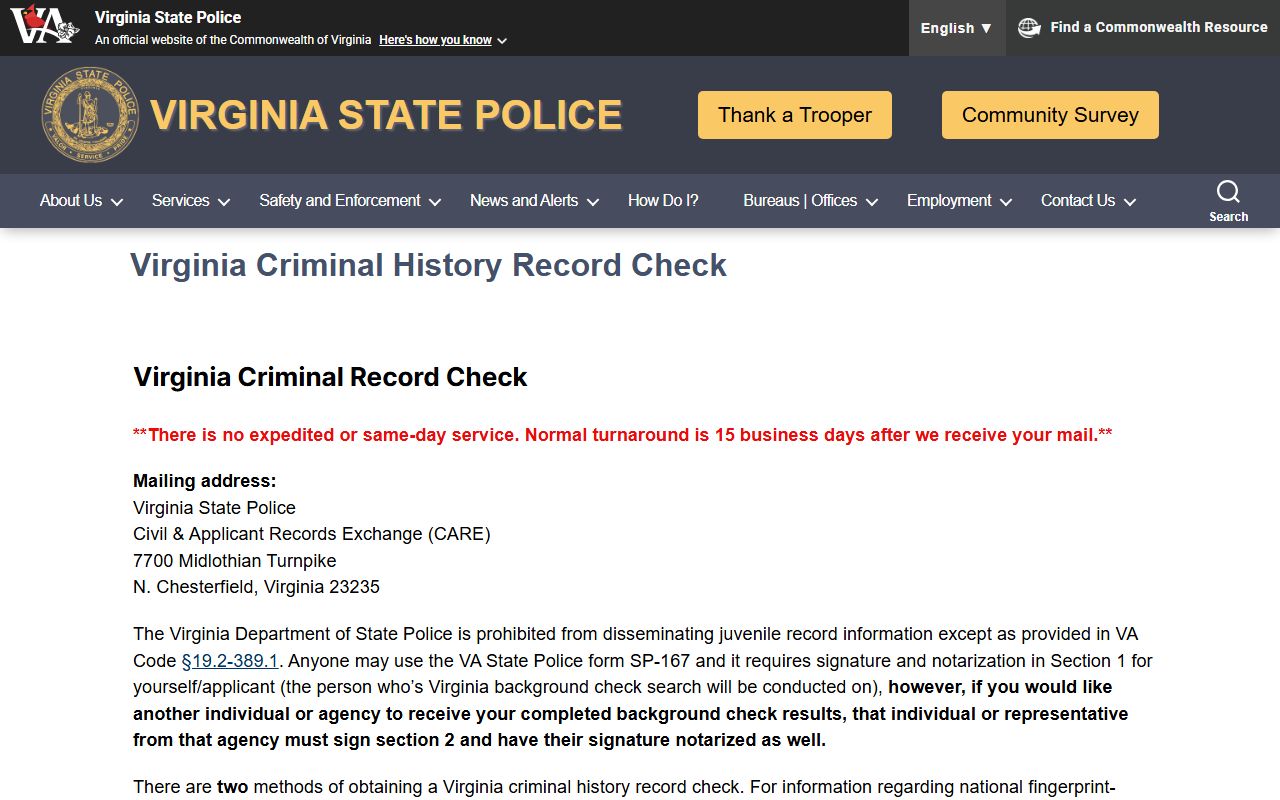
The Virginia State Police Criminal Records Exchange has been operating since 1966 and serves as the central hub for arrest data statewide.
Virginia State Police Criminal Records Exchange
The Central Criminal Records Exchange, run by the Virginia State Police, is the official statewide repository for criminal history data. It holds fingerprints, photographs, and criminal history information submitted by local law enforcement agencies across Virginia. The Exchange was set up in 1966 and is the only criminal recordkeeping agency for the Commonwealth.
If you want a name-based criminal history search, you can submit the SP-167 form to the Virginia State Police. The cost is $15 per search. Processing takes about 15 days. The state police does not offer rush service. You can also request a combined criminal history and sex offender search for $20 using the appropriate form. Personal checks are not accepted. Payment must be by certified check, money order, business check, or credit card.
The Virginia State Police forms page has the SP-167, SP-230, and SP-266 forms you need for different types of record requests.
The forms and applications page at the Virginia State Police shows all available request options.
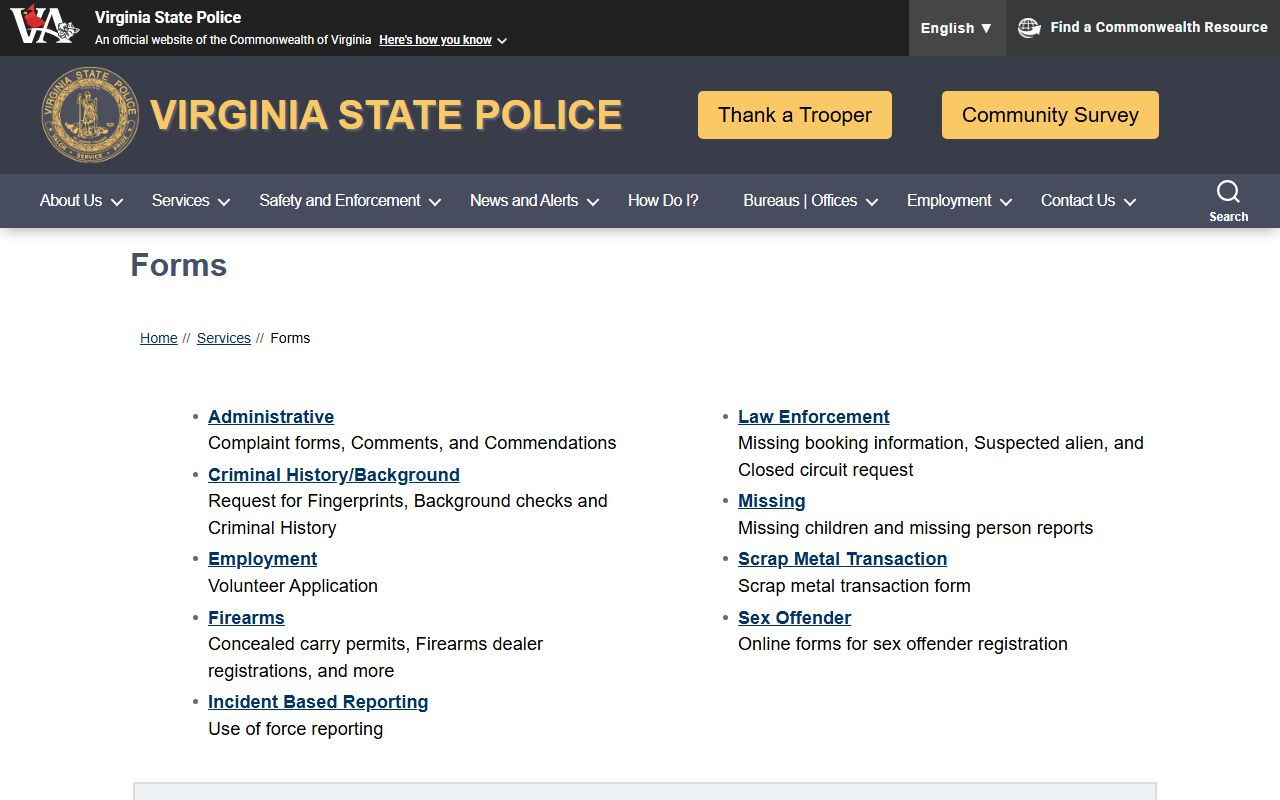
The SP-167 form is for individual use. The SP-230 is for authorized agencies. Both can be found on the state police site at vsp.virginia.gov.
The CCRE maintains records submitted by all Virginia law enforcement. This includes fingerprints taken at booking, booking photographs, and all criminal history updates as cases move through the courts. Records are kept according to retention schedules set by the Library of Virginia. Adult arrest records are generally kept for 100 years from date of birth.
Search Virginia Arrest Records Online
Several tools let you search for Virginia busted mugshots and inmate information without visiting a courthouse or jail in person. Each has a different scope and level of detail.
The Virginia Online Case Information System (OCIS 2.0) covers circuit court cases statewide. You can search by name, case number, or hearing date. The system shows criminal case status, hearing dates, and docket entries. You have to agree to the terms of use before accessing data. Not every county is on the system but coverage is wide. This is a good starting point for court records tied to an arrest.
Virginia's Online Case Information System provides statewide court search capability for criminal cases.
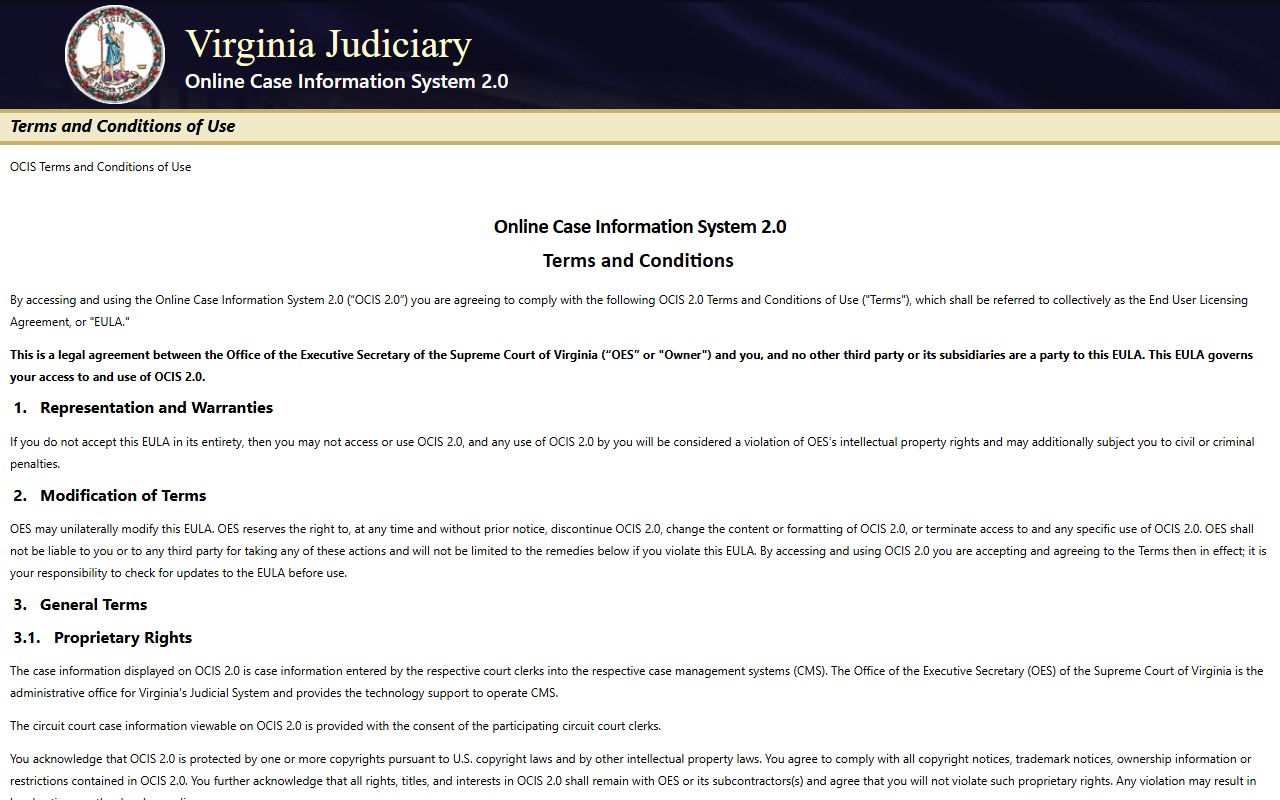
The OCIS system is free to use and covers circuit courts across the Commonwealth of Virginia.
The Virginia Department of Corrections Offender Locator lets you search for people in state prison. You need at least the first letter of the first name and the full last name, or a seven-digit Offender ID. Results include current facility, release date, and a photograph. This only covers those under VADOC custody. Local jails are separate and not included in this search.
The VINE service at vinelink.com is the official statewide system for local jail custody status. You can check if someone is in custody, where they are held, and when they might be released. VINE also sends notifications by phone, text, or email when an inmate's status changes. The service is free.
VINE provides free jail custody status and notifications for victims and the public across Virginia.
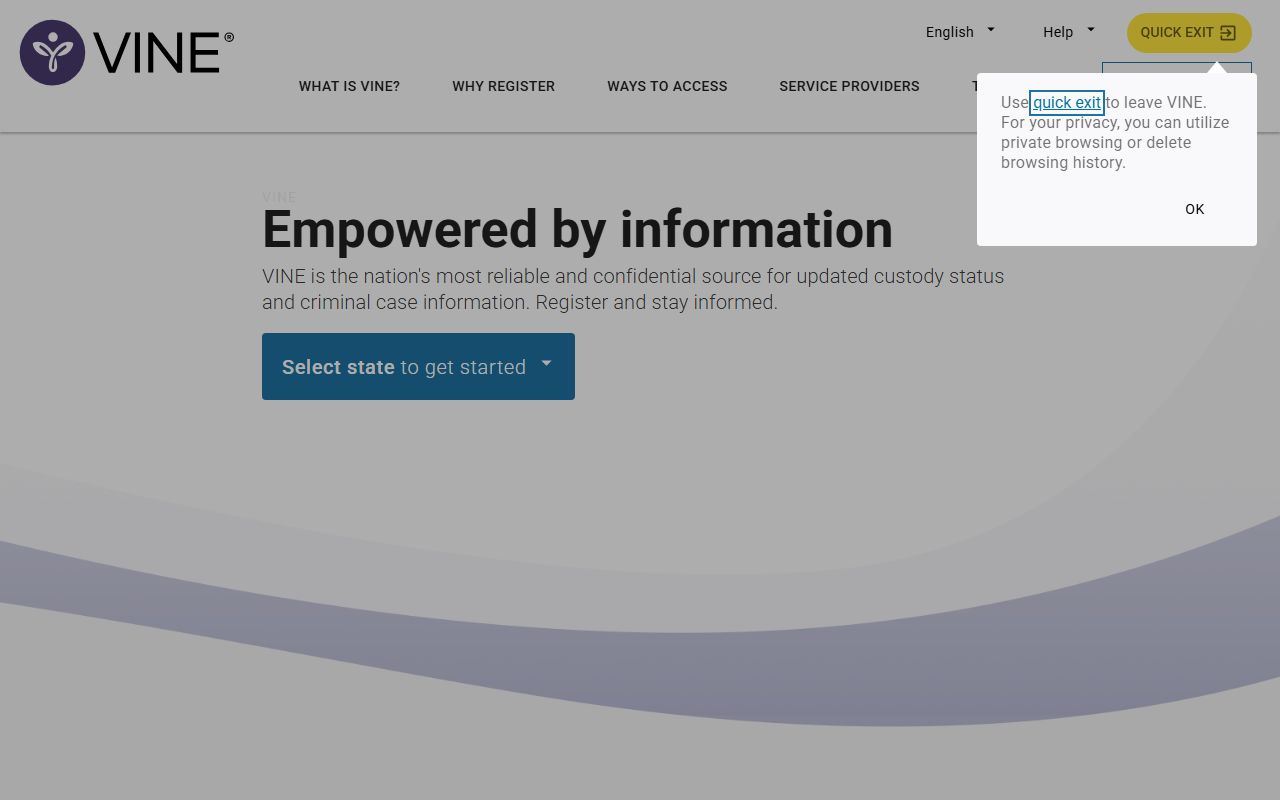
VINE covers most Virginia county and city jails and is updated regularly throughout the day.
Virginia FOIA and Busted Mugshots
Virginia's Freedom of Information Act gives the public the right to get government records, including arrest records and booking photos. The law is found in the Virginia Code starting at §2.2-3700. Public bodies must respond within five working days. If they need more time, they must say so within that window.
Criminal records fall under Virginia Code §2.2-3706, which lays out what must be released, what may be released, and what is off limits. The mandatory release section requires agencies to provide criminal incident information on felony offenses, adult booking photographs, and adult arrestee identity and charge information. These are not optional.
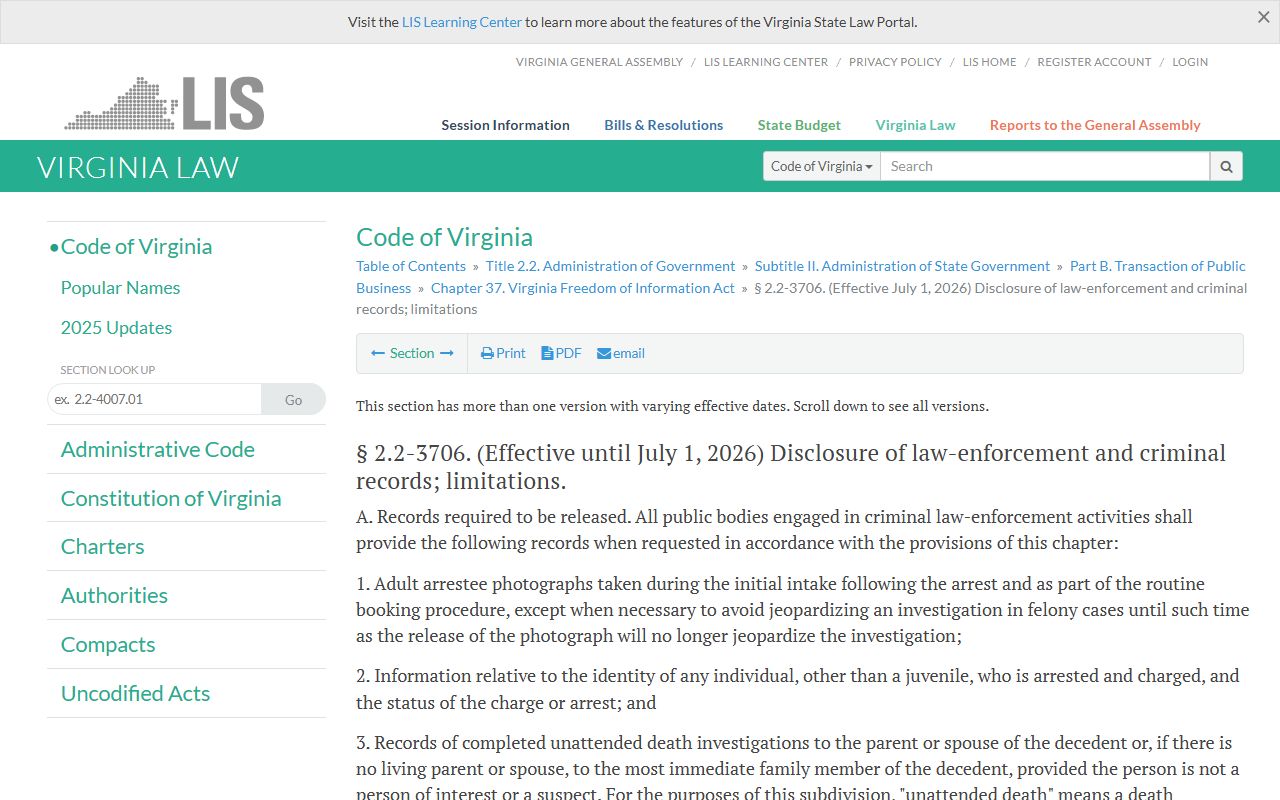
Virginia Code §2.2-3706 is the key statute governing when arrest records and mugshots must be released to the public.
Effective July 1, 2021, Virginia Code §2.2-3706.1 expanded access to criminal investigative files. You can now request files from investigations that are no longer active. These files can include complaints, incident reports, photographs, witness statements, and other materials. Agencies have up to 60 extra work days to respond to these requests. But they must tell you within the initial five-day window that they need more time.
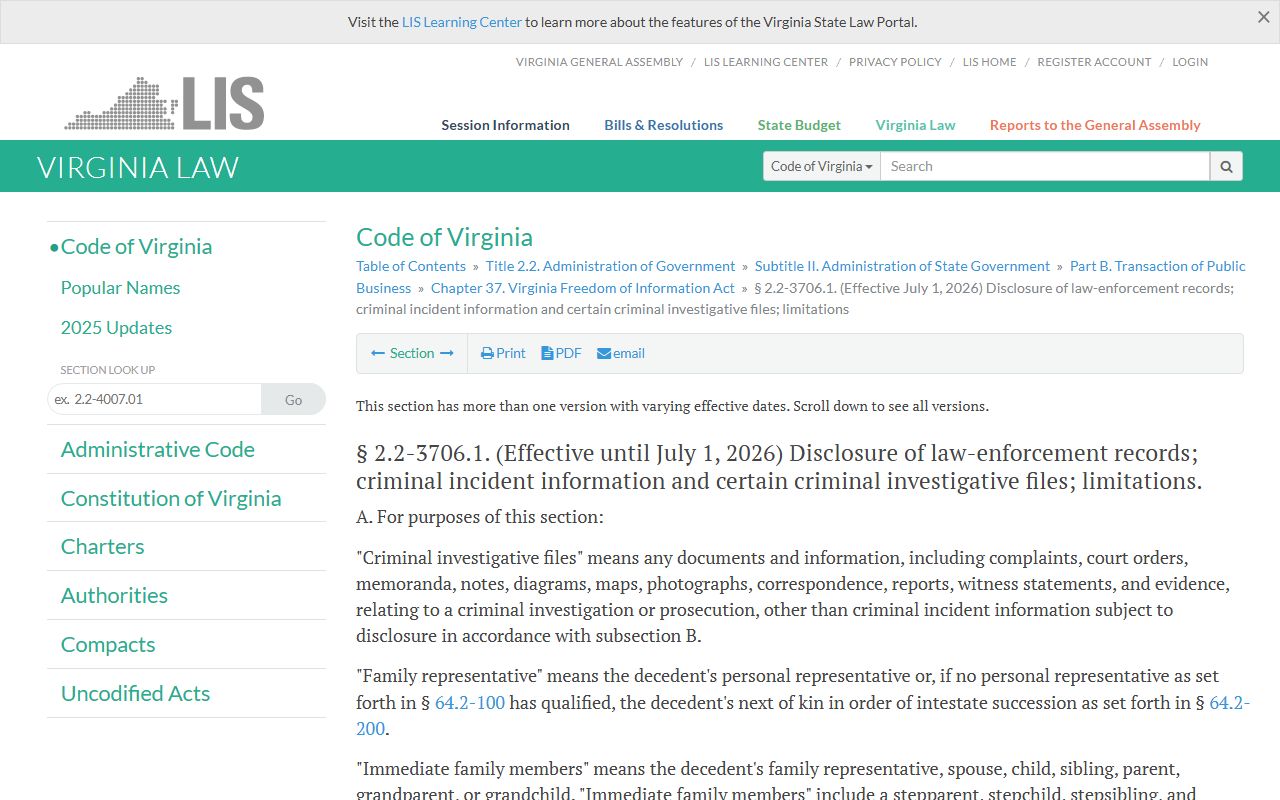
The 2021 change to Virginia FOIA opened up access to closed criminal investigative files that were previously kept from the public.
Virginia Expungement and Record Sealing
If a person's arrest record or mugshot appears in public databases and their case was dismissed or they were acquitted, they may be able to get those records removed from official files. This is called expungement.
Under Virginia Code §19.2-392.2, only people who were arrested but not convicted can file for expungement. The petition goes to the circuit court where the case was handled. The petitioner must serve the prosecuting attorney, who has 21 days to respond. Fingerprints must be submitted to a law enforcement agency, which sends them with the petition to the Central Criminal Records Exchange. The CCRE sends the petitioner's criminal history to the court under seal. If the court approves, the clerk forwards the expungement order to the Department of State Police, which directs how records are handled. Expunged records are no longer open to the public.
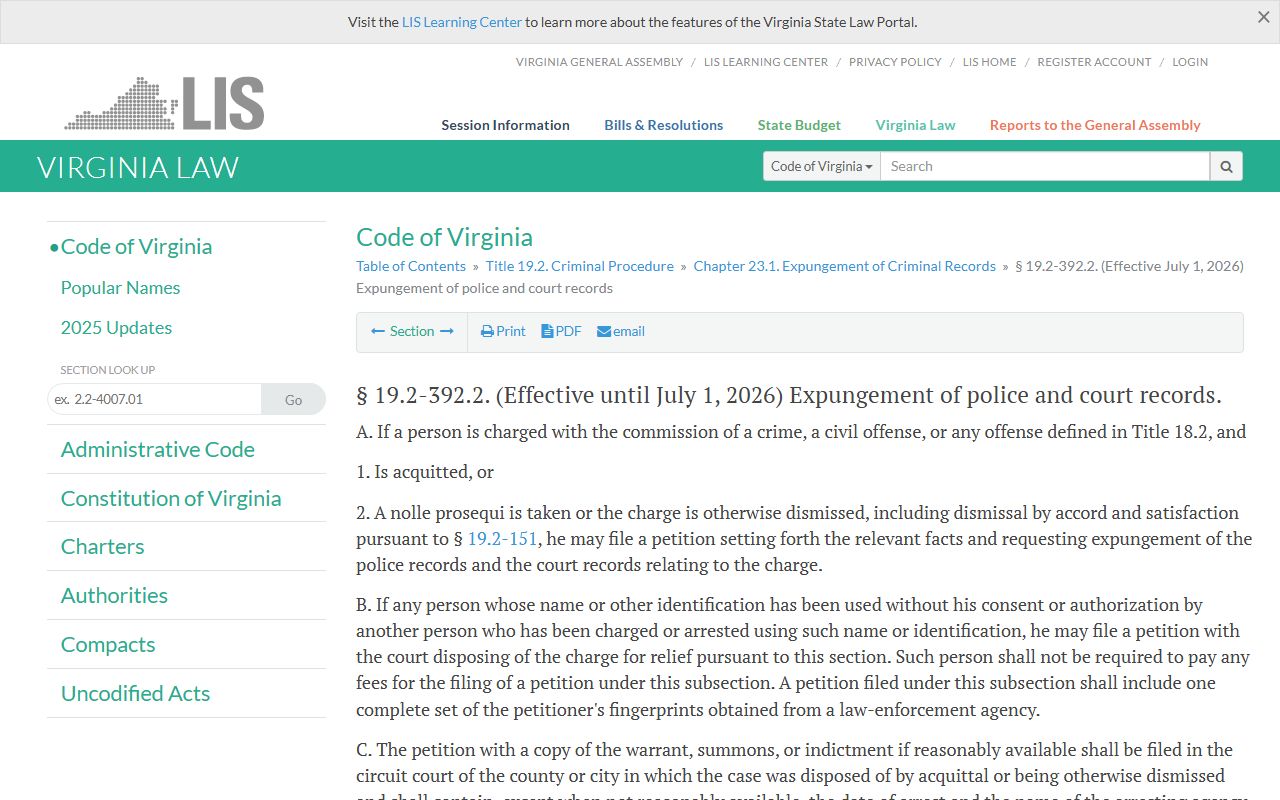
Virginia Code §19.2-392.2 covers the full process for removing arrest records and booking photos from public access when a case was not a conviction.
Virginia also passed new record sealing laws in 2021 that cover certain convictions. These statutes, found at Title 19.2, Chapter 23, take effect July 1, 2026. This is different from expungement, which only covers non-convictions. Once in effect, eligible Virginians with criminal convictions can petition to have their records sealed from public view. These are sometimes called Virginia's Clean Slate laws. The goal is to let people who have paid their debt to society move forward.
Virginia Sex Offender Registry and Mugshots
The Virginia State Police maintains the Sex Offender and Crimes Against Minors Registry. It includes photographs of registered offenders and is free to search online. The registry is available under Virginia Code §19.2-390.1. You can search it at sex-offender.vsp.virginia.gov.
Registry information includes the offender's name, all aliases, date and place of conviction, offense description, date of birth, current address, and photograph. The database is searchable by county or zip code. It is updated every business day. Violent sex offenders can be searched at no charge. A full registry name search using the SP-266 form costs $15.
Two categories exist: sex offender and violent sex offender. Standard sex offenders must register for 10 years and can then petition for removal. Anyone convicted of a second covered offense must register for life. Using registry information to harass or intimidate someone is a Class 1 Misdemeanor in Virginia.
Requesting Mugshots from Local Virginia Agencies
Most busted mugshots in Virginia are held at the local level. Each county sheriff's office and each independent city's police or sheriff department books people into their local jail and takes booking photos. These agencies are the first place to go when searching for a specific person's mugshot or arrest record.
To request records, write to the agency's records division. Include the person's full name, the approximate date of arrest, and any charge information you have. Agencies must respond within five working days under Virginia FOIA. Some have online portals for record requests. Others require you to come in or send a letter. Fees vary. A few agencies charge nothing. Others charge per page for copies. The Virginia State Police charges $15 for a name-based search through their system.
The Library of Virginia sets the retention schedules for all criminal justice records in the state. Law enforcement agencies follow General Schedules GS-108 and GS-117 for these records. Under these rules, adult arrest records are kept for 100 years from the date of birth. Juvenile records follow different timelines.

The Library of Virginia at lva.virginia.gov oversees record retention schedules for Virginia law enforcement agencies.
The CCRE at Title 19.2, Chapter 23 of the Virginia Code governs how records are collected, kept, and shared. Section 19.2-392 requires that police take fingerprints and photographs for most arrests. These become part of the official record. Once submitted to the CCRE, they are part of the statewide criminal history system.
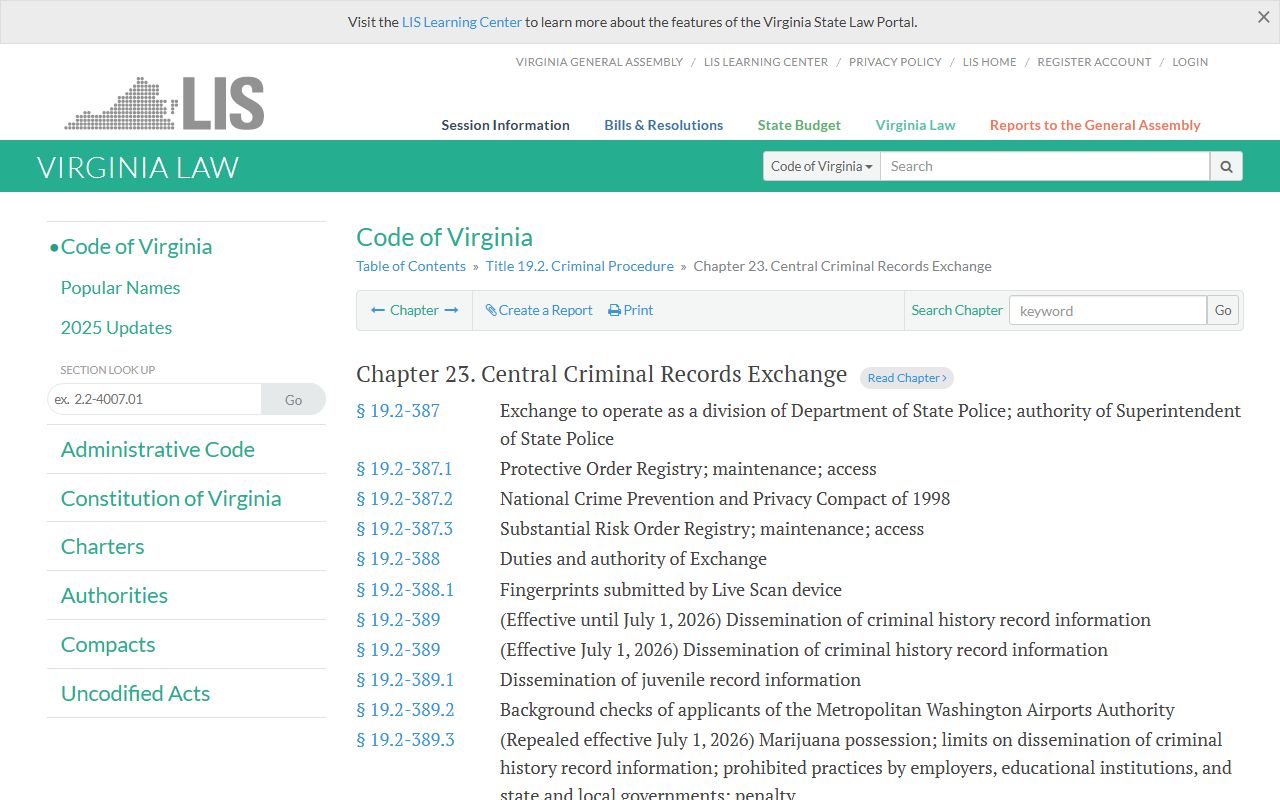
Title 19.2, Chapter 23 of the Virginia Code at law.lis.virginia.gov is the legal foundation for Virginia's criminal records system.
Third-Party Virginia Mugshot Databases
Several websites aggregate Virginia busted mugshots and arrest records from law enforcement agencies. These are not official government sources but can be useful for finding recent booking information. One widely used resource is virginia.arrests.org, which describes itself as having the largest database of Virginia mugshots. The site organizes records by county and city and shows booking photographs, charges, arrest dates, and bond information where available.
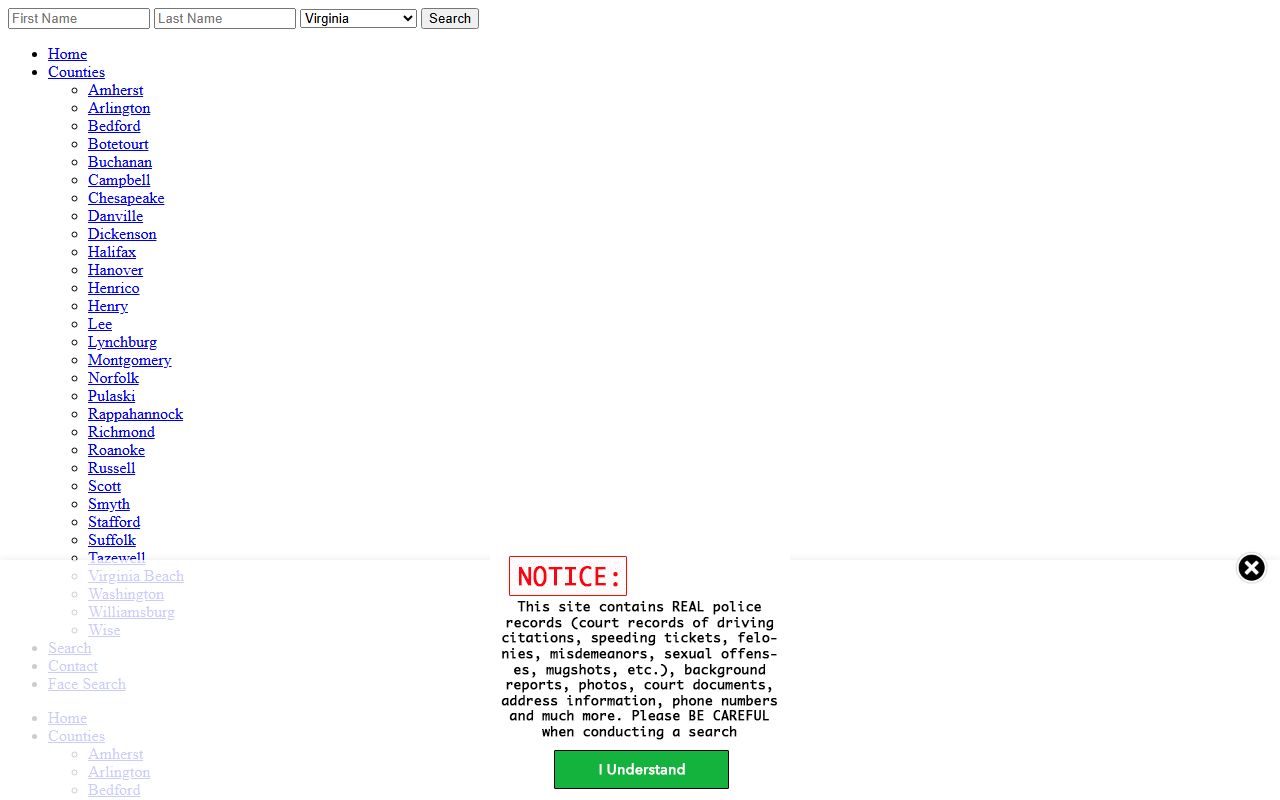
Third-party aggregators like virginia.arrests.org pull from multiple local law enforcement sources but are not official government records.
When using third-party databases, keep a few things in mind. Records may not be updated immediately after a charge is dropped or a case is dismissed. If a person's records have been expunged, official agencies must remove them, but private websites are not always required to follow suit. For the most accurate and legally binding information, always go directly to the official agency or court that holds the original record.
Browse Virginia Busted Mugshots by County
Each Virginia county has its own sheriff's office, jail, and circuit court handling arrest records and booking photos. Select a county to find local resources for busted mugshots in that area.
Busted Mugshots in Major Virginia Cities
Virginia's independent cities each maintain their own police departments, sheriff offices, and jails. Select a city to find local mugshot and arrest record resources.